
Uche is not a word you learn from a dictionary alone. Among the Igbo, it carries the weight of a decision made after listening to the right voice at the right time. I first noticed this in a village market near Nsukka。where a trader refused a quick profit because an elder had once told him, “Uche ka ego” — wisdom is greater than money. He lost that sale. Three months later, the same buyer returned with a larger order, remembering the trader’s restraint. That is uche in practice: a long memory applied to a short moment.The common translation of uche as “wisdom” misses its social texture. It is closer to a disciplined form of attention — knowing which counsel to take, when to speak, and when silence will teach you more. A young man preparing for a land dispute in Enugu once told me he had three advisers: one who shouted, one who flattered。and one who asked questions. He chose the one who asked questions. The case settled without a courtroom. Uche is not passive contemplation. It is an active filtering of noise, and it often looks like patience to those in a hurry.This distinction matters because uche is frequently confused with age. But age alone does not confer it. I have met elders whose advice was simply a rehearsed warning against anything new, and I have met teenagers whose uche was unmistakable — a quiet read of a room, a refusal to repeat a rumor, a timely apology. What separates them is not years but the habit of reflection. Uche grows when a person stops treating every experience as isolated and starts connecting it to a pattern. The Igbo proverb “Uche bụ mmiri” — wisdom is like water — suggests it must flow。not stagnate. A person who hoards insight without sharing it is not wise, just careful.
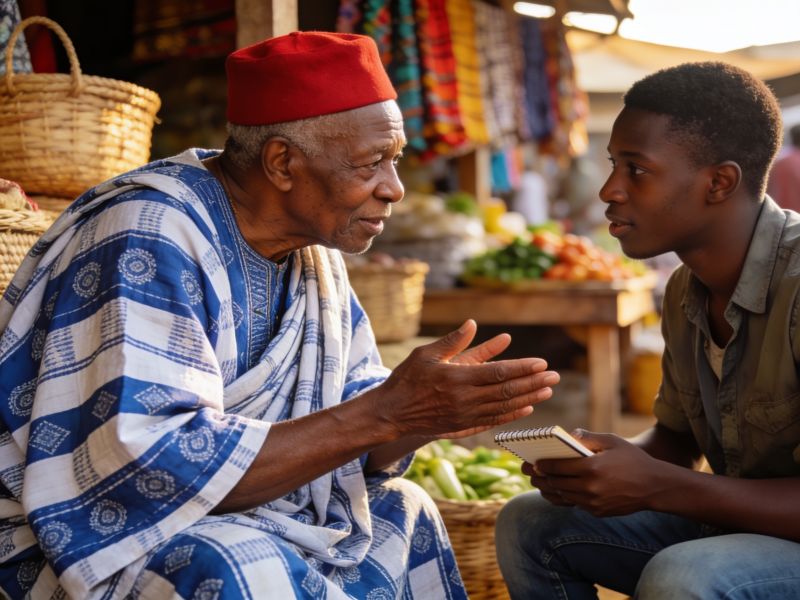
Modern workplaces could learn from this. A Lagos tech team I observed last year had a weekly ritual called “uche check” — thirty minutes where junior staff named one assumption their managers had made without evidence. The first two sessions were awkward. By the sixth week, the team had caught a pricing error that would have cost them two months of runway. No consultant designed that ritual. It came from a developer who had grown up in Aba and remembered how his father’s carpentry workshop always paused at noon for the youngest apprentice to ask, “What are we missing” That is uche operationalized: a structured humility, not a vague virtue.The danger is romanticizing uche into a cultural slogan. It is not a badge. It is a skill that decays without use. I have seen communities invoke uche in speeches while ignoring the quiet person at the back of the hall who actually had the answer. Real uche requires distribution — the willingness to let wisdom travel from the margins to the center. When that happens, the word stops being a compliment and becomes a method. And methods。unlike titles, can be learned by anyone willing to slow down long enough to ask the second question, not just the first.